Residents Associations have historical roots in Victorian philanthropy, writes Sue Reece, often established by wealthy individuals and religious organisations to address poverty and homelessness.
However, many evolved to become the mechanism for communities to take ownership and advocate for positive action.
This was particularly important during the post World War II era and the 1960’s and ’70s when housing crisis and increased public awareness fuelled their growth and they are as equally important today in campaigning for local improvements.
Chilton has long recognised the value and need of working together as a community.
Margaret Taylor was one of the founding members of the original Chilton West Residents Association, established to deal with specific issues that the community was facing at that time.
It was so effective in giving a voice to local people that it widened its reach to cover Chilton and Windlestone and in 1998 set up a community house to offer support and social activities in the village.
Working in partnership with the Council, they received funding for a community worker employed to offer free advice sessions, run schemes that provided free vegetables, cookery and food hygiene classes to promote healthy eating.
Margaret was nominated for Durham County Council Chairman’s medal and met Queen Elizabeth II at a ceremony on Palace Green to recognise her work as a “Community Champion.”
The Community House is sadly no longer in operation but many of the issues Margaret and her fellow members worked to resolve are once again prevalent within the Town, including poverty, lack of affordable housing, poor housing conditions, anti-social and criminal behaviour.
It is therefore vitally important that the Chilton Resident Association is still here to provide the interface between residents, the Town Council, County Council and public services to raise matters of concern.
Margaret may no longer be at the helm but her daughter and son-in-law, Fiona and Kevin Cameron ensure that her legacy and those of the early members continues.
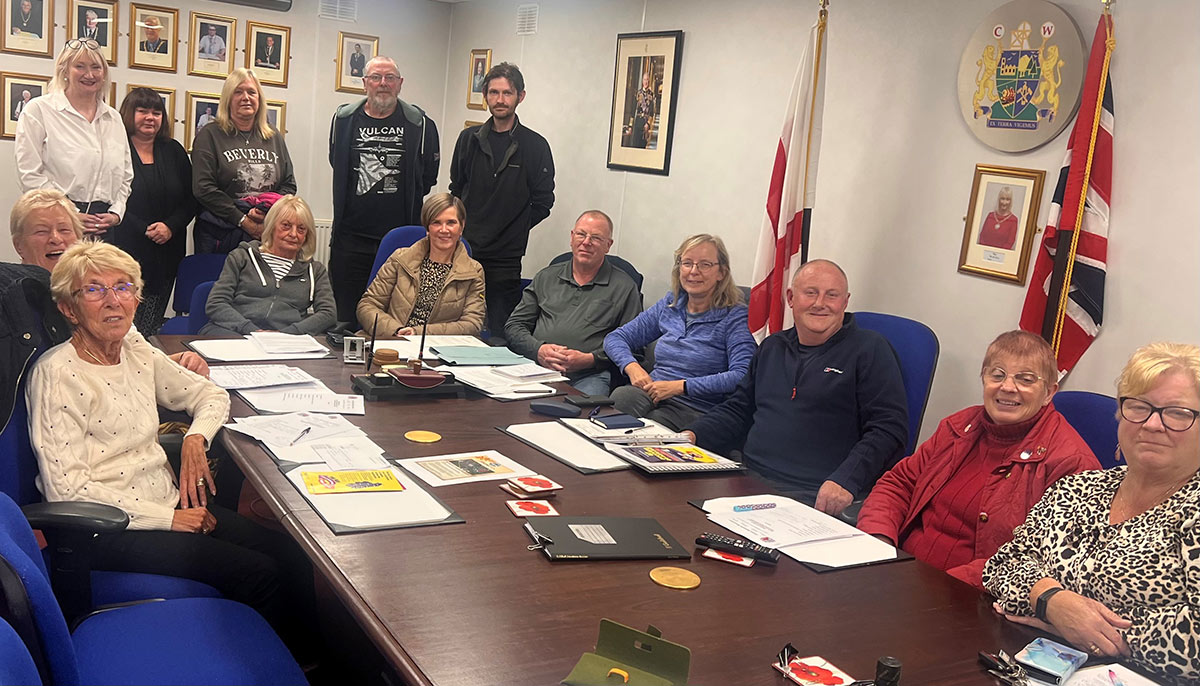
The Association is open to all residents, and the bi-monthly meeting is attended by members of Chilton Town Council with regular representation from DCC Safer Communities, anti-social behaviour teams and other invited guests to discuss issues raised by members of the community.
To ensure that that your voice is heard, and we have collective community representation, come along to the next meeting, details of which are regularly published in the Ferryhill and Chilton Chapter and on the Town Council website at chiltondurham-tc.gov.uk/

Sue Reece

Ferryhill & Chilton's local community newspaper.