As part of our Indie News Week Campaign we have teamed up with Sarah Hartley from The Northern Eco to collaborate, share ideas and fundraise.
Here, Sarah bring us an exclusive report about some local research which could have national implications for local authority policy. What are the public views of environment vs beauty, and what is the public attitude towards rewilding throughout County Durham?

If this was the view from your window, which would you prefer?
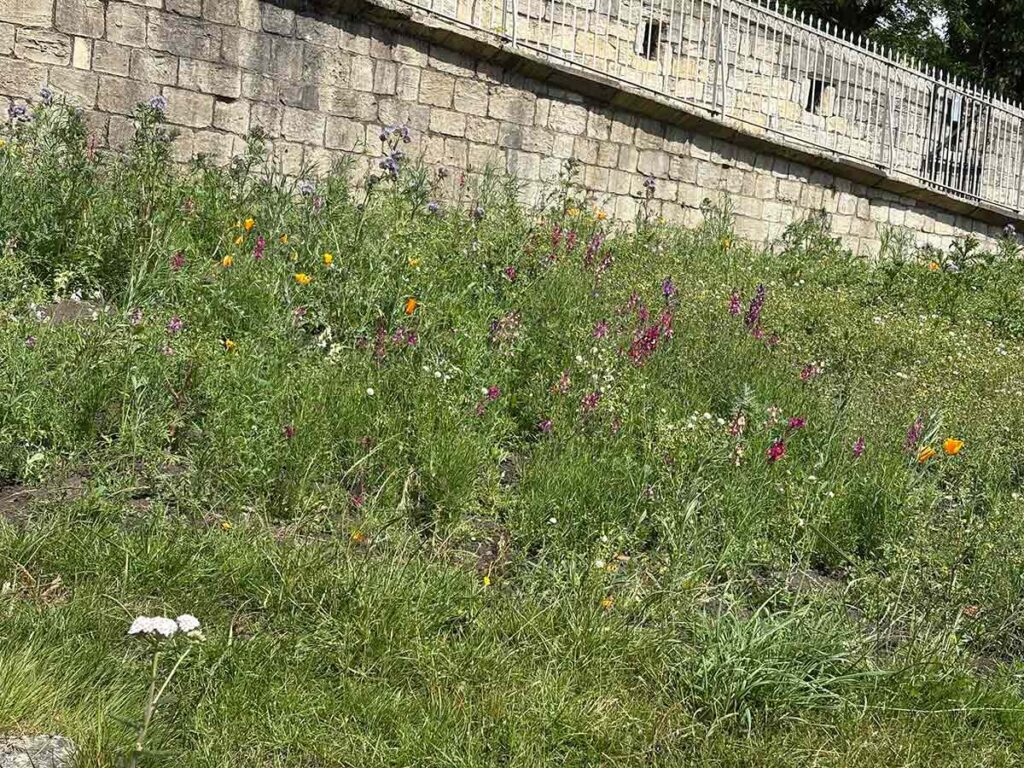
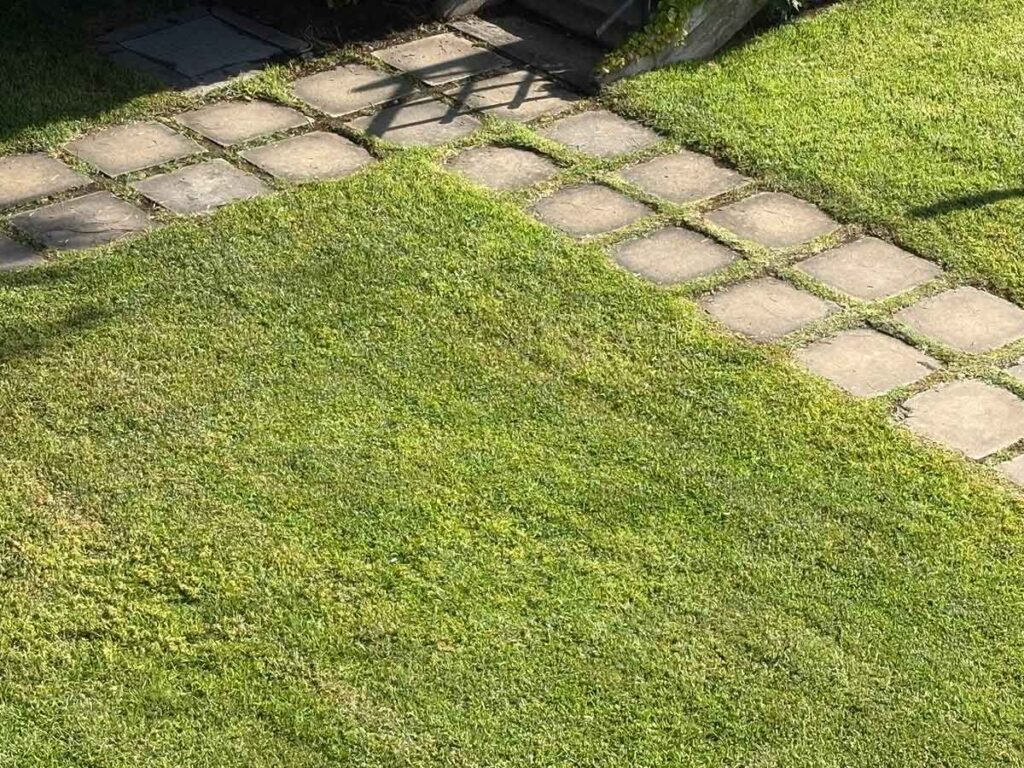
Maybe you find the photo at (1) looks too messy? Or, conversely, maybe the photo at (2) just looks overly orderly? It might seem a simple preference but that gut reaction could ultimately have knock-on effects into public policy and the delivery of your local services.
Discovering more about our ideas of beauty and aesthetic appeal lie at the heart of a fascinating piece of research being carried out by Durham University’s Dr Jack Hughes. His work could change the way councils think about the way they keep our public spaces.
I contacted Dr Hughes in the context of our In the Weeds campaign which is calling for a ban on the use of the pesticide glyphosate in public spaces. Although his research has started by looking at on attitudes to mowing in public spaces, the same concerns and attitudes are pertinent when talking about pesticide use so I was fascinated to hear more about his work.
He told me how the work started:
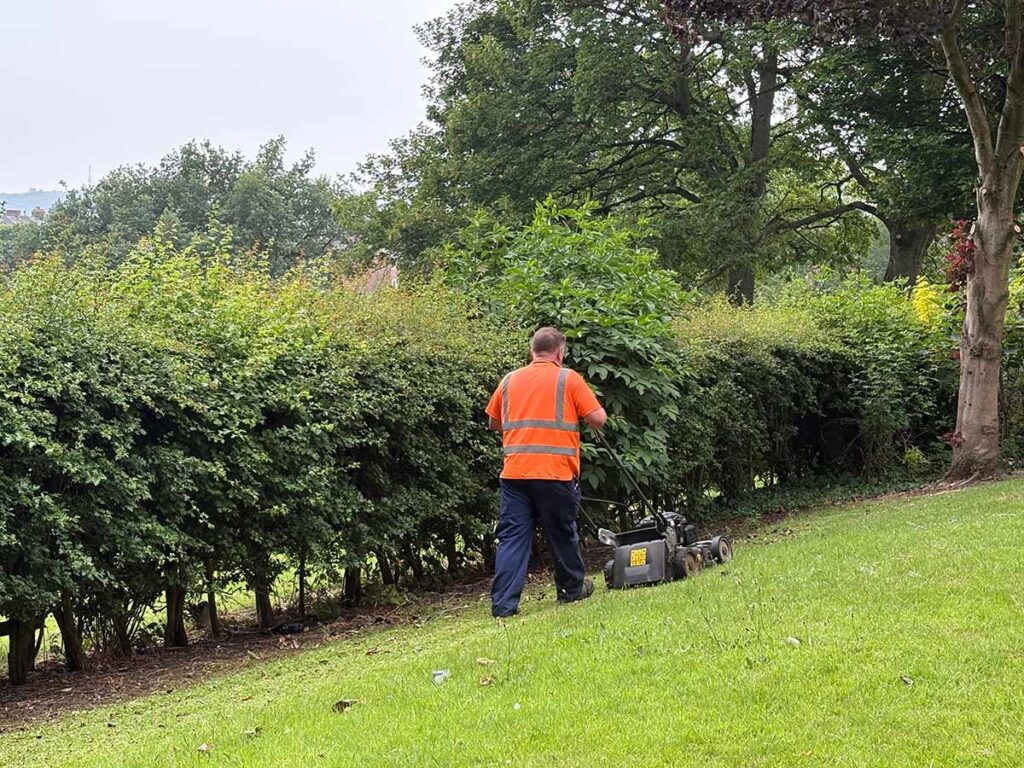
“I was very frustrated at a man coming and mowing the piece of public lawn outside the front of my old flat every two weeks. As soon as all the beautiful flowers came up – you had the daisies and the buttercups and the dandelions all just appearing – then a man in a high vis would come and mow it all down, over and over again.
“So I called up one of my local county councillors at the time and said, ‘why do you keep mowing this land?’, to which we had a long conversation, which essentially boiled down to them saying that, when they don’t do it, people complain.”

That was in 2022 and the encounter sparked a journey where the environmental behavioural psychologist set out to provide a better, more scientific approach to the topic rather than relying on the qualitative data drawn from people moved to complain the loudest.
The project started with a survey. The Council and University teams collaborated to share the survey across the entirety of County Durham The participants were approached through mailing lists, internal university systems, internal council systems, a press release and the ‘County News’ magazine sent to all households. They received 1,560 responses and then sifted out those from out of the area or ineligible, to work with a final dataset of 709 people.
Of these 709 residents 64.7% identified as women, and 94.5% classed themselves as white. The average age of participants was 51.7 years old and ranged from 18 – 81 years. This is largely inline with the county demographics.
“The survey was about trying to identify what are the perceptions and concerns that are of most importance to people,” said Dr Hughes, “so we essentially asked people, do you, would you, support increasing re-wilding practices? Would you support reducing the amount of mowing that happens in an area, and then using those kind of measures, aggregating them to form our outcomes.”
What were the findings?
In the summary of the final report, the key findings of the survey were as follows:
- County Durham residents underestimate how much the Council mows.
- County Durham residents were slightly (but significantly) in favour of reducing the amount of mowing in County Durham even despite their subjective underestimations of how much the Council mows.
- Residents were quite in favour of there being more wild spaces in County Durham.
- The two most important factors when considering opinions to increase or decrease mowing were beauty and environment. The more people cared about beauty, the more regularly they wanted green space mown, whereas the more they cared about the environment the more they wanted green space left wild.
- Participants indicated indifference toward mowing for most types of green spaces. The only places with a clear indication that mowing was important were graveyards, parks, sports pitches and footpath borders. Mowing was seen as decidedly unimportant for unused spaces, in particular.
“The big finding, was that it all comes down to perceptions of aesthetics, and so if you’re recognising the ecological emergency, and recognising that you do need to change the way that you manage the land, you don’t need to worry about messaging around cost or messaging around environmental benefit.
“The messaging that you really need to do, and the way you need to design the land when you reduce your mowing, is all focused on trying to keep it looking as pretty as possible.”
The next stage for this research is to go in-depth to really understand more about the perception of pretty, of beauty and the aesthetics.
“What I want to do next in this research is trying to identify how they (councils) do this? For example, is it just leaving a border, like a mown border around an un-mown space, so there’s kind of got an edge to it and feels more neat? Is it putting a mini fence around the area so they can see that it’s meant to be an area that’s cordoned off, and so then you can let the brambles grow within it? Even just putting a sign up saying ‘we’re doing this so it looks beautiful’ with a photograph of what it will look like in the springtime.”

Sarah Hartley

South West Durham News covering news across County Durham.