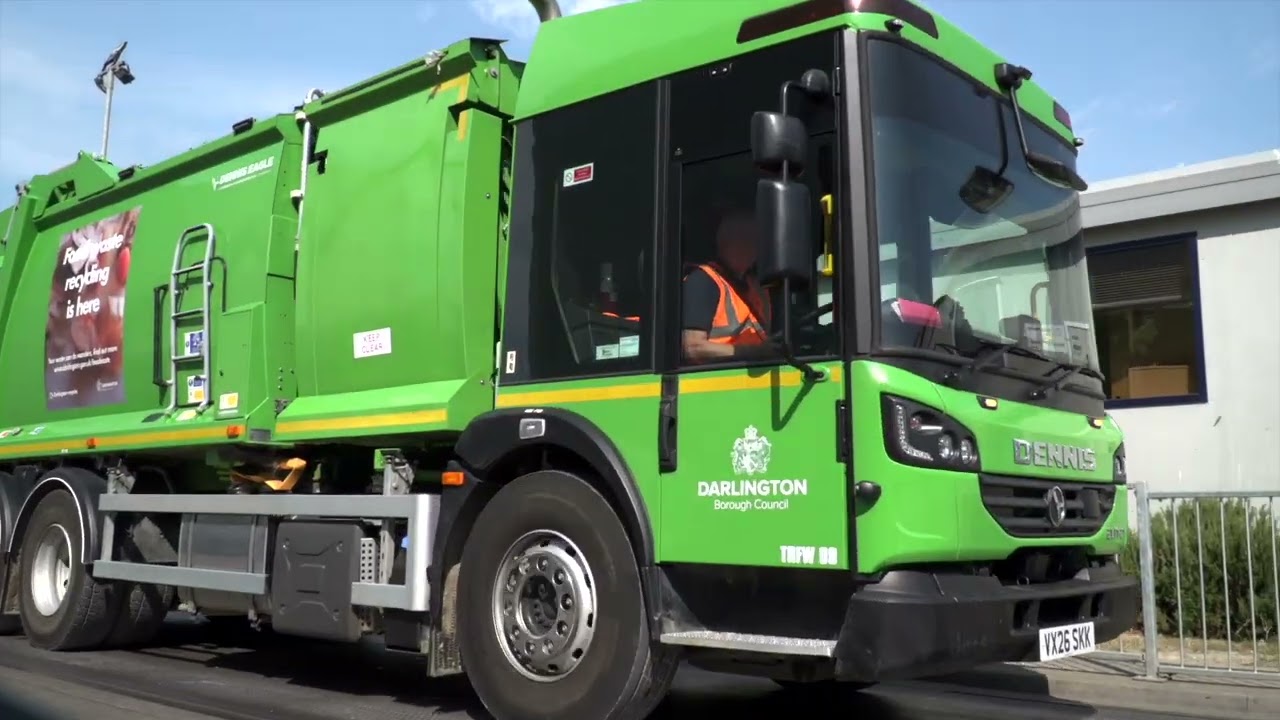
A video showing what happens when food waste is recycled has been released to coincide with the news that 530 tonnes of food waste were recycled in Darlington in the last 12 weeks.
Since food waste collections started across the borough on June 2, more than 530 tonnes have been collected and recycled.
The video, which is available on the council’s website and YouTube, shows how food waste collected from homes across the borough is used to power local homes, businesses and vehicles, whilst also supporting local farmland.
The waste is taken to Bio Capital’s Warrens Emerald facility in Newton Aycliffe, where it is weighed, inspected and sorted.
It is then treated and fed into an enclosed oxygen-free tank where it’s broken down by microorganisms via a process called anaerobic digestion.
This lets off a low-carbon biogas, which is transformed into green energy that is used to power homes and businesses via the national grid. The process also creates compressed natural gas – a low-carbon biofuel for vehicles.
What’s left over after this process, is a nutrient-rich organic biofertiliser used on local farmland to support food production, as a sustainable alternative to chemical fertiliser.
Libby McCollom, cabinet member for local services, said: “I want to thank everyone who has been recycling their food waste and urge those who haven’t yet started to get involved. It doesn’t matter how little food waste your produce – just six recycled teabags can generate enough energy to boil the kettle for your next cuppa!
“It is amazing to think food waste already collected in the town is powering homes, business and cars as well as helping farmers. By taking the time to recycle your food, you’re also helping to protect our planet by diverting food waste from landfill.”

South West Durham News covering news across County Durham.