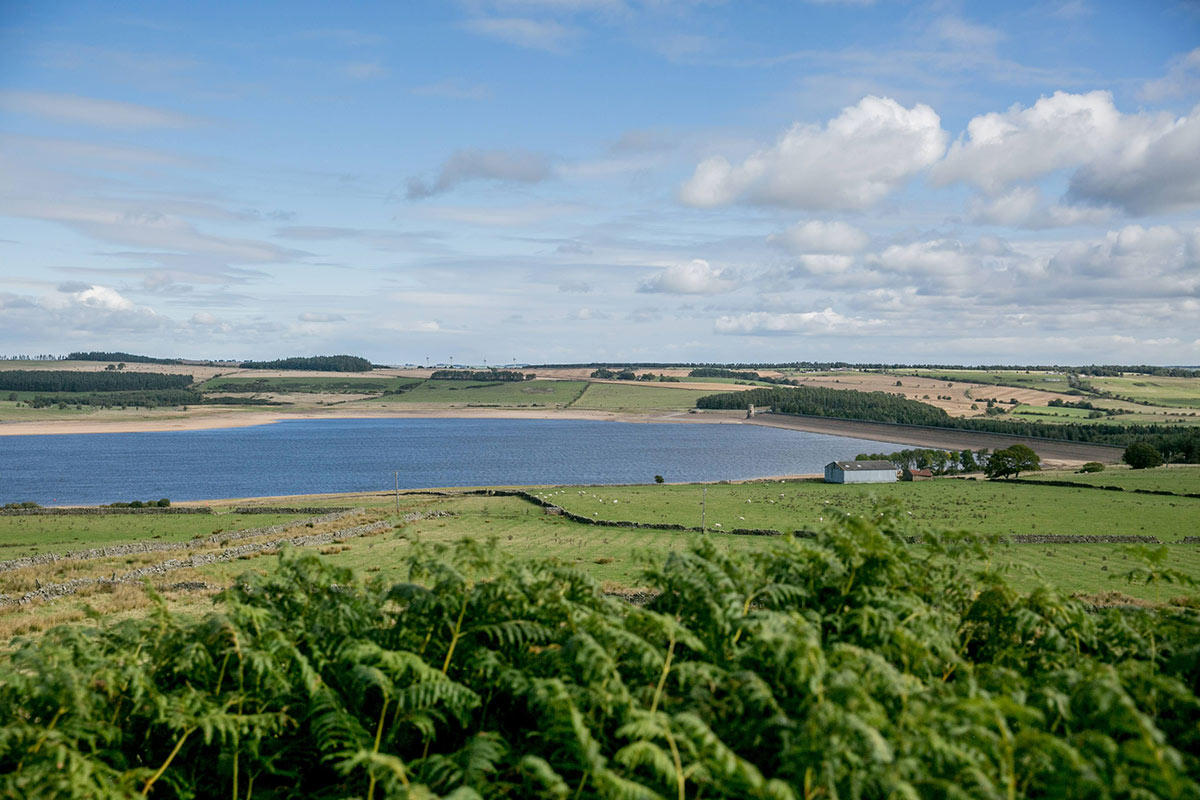
Climate change could leave reservoirs at lower levels during the summer and increase drought risks across County Durham, a council report has warned, writes Local Democracy Reporter, Bill Edgar.
The Strategic Environmental Assessment (SEA), produced as part of an update to the County Durham Plan, says changing rainfall patterns could put pressure on water supplies.
It says climate modelling by Northumbrian Water indicates that with less summer rainfall, reservoirs in the Kielder Water Resource Zone could fall to lower levels before refilling in winter.
The report says the new County Durham Plan will need to take “full account of the risk of drought to water capacity and availability over the Plan period”.
It also highlights existing water pollution problems in the county, including those linked to its mining heritage and wastewater infrastructure.
In Upper Teesdale, the assessment says the Tees Carboniferous Limestone and Millstone Grit groundwater body is failing to achieve good status because of metal mine discharges. It specifically identifies pollution affecting the Harwood and Hudeshope Becks and Eggleston Burn catchments.
The report also warns that hotter and drier summers could reduce river flows, meaning there would be less water available to dilute pollutants from minewater discharges. Wastewater has also been identified as another source of pollution in the Tees catchment. It lists combined sewer outfalls, wastewater treatment works and misconnections among the sources affecting water quality.
The report says improvements to wastewater treatment infrastructure will be needed for both domestic and industrial sources. The capacity of wastewater infrastructure to deal with new development will be an important consideration as the County Durham Plan is updated, the report added.
County Durham’s water bodies face pollution from a range of sources, including the legacy of coal and metal mining, wastewater treatment, agriculture, surface water runoff and misconnections.
Existing and potential future pollution could increase risks to public and private water supplies and environmentally important sites that depend on water.
The findings form part of the evidence being considered as Durham County Council develops its new County Durham Plan, which will provide an updated framework for future development across the county.
The current consultation on the plan’s early evidence and scoping work is due to run until August 17.

Bill Edgar
Reporter for the Local Democracy Reporter Service.

South West Durham News covering news across County Durham.