This pioneering locomotive hauled the first train to Stockton, cementing Shildon’s place as the ‘Cradle of the Railways’ – the world’s first, true railway town
Sarah Price, Head of Locomotion
The National Railway Museum has announced that Locomotion No.1 is to return permanently to Shildon, where the world’s first passenger steam engine departed from the Mason’s Arms on 27th September 1825.
The engine’s return to its spiritual home forms part of ambitious plans for the future of Locomotion in Shildon, placing the world’s first railway town at the heart of the Stockton and Darlington Railway’s bicentenary celebrations in 2025.

New development
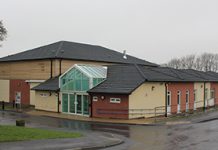
A £4.5m plan will see the construction of a new, 4,000m2 ‘Building Two’, close to the existing visitor centre, which will almost double the amount of covered space available to the public.
The building will house up to 40 vehicles from the national collection, bringing the total number of rail vehicles at Locomotion to more than 100.
Construction work is set to commence in October 2021 and the building is due to open to the public in September 2022.
To further recognise Shildon’s role as the birthplace of the modern passenger railway, historic steam engine Locomotion No.1 – the first to haul a scheduled passenger train – will also go on display at the redeveloped museum.
The locomotive is part of the national collection, cared for by the Science Museum Group, and is currently on loan at the Head of Steam Museum in Darlington.
When the existing loan period ends in 2021, the vehicle will travel the short distance to its new home in Shildon, where it will be displayed as the focal point of Locomotion’s redevelopment.

Cradle of the Railways
Sarah Price, Head of Locomotion said: “On 27th September 1825, George Stephenson’s Locomotion No.1 set off from outside the Mason’s Arms public house in Shildon – just a short distance from where the museum is now based.
“This pioneering locomotive hauled the first train to Stockton, cementing Shildon’s place as the ‘Cradle of the Railways’ – the world’s first, true railway town.

“Our ambitious plans will see significant investment in the existing site’s historic buildings, the construction of Building Two to showcase our collection and the display of Locomotion No.1 – one of the world’s most significant engines.”
The development will also see the repair and rejuvenation of Locomotion’s historic buildings.
The museum is home to a collection of unique Grade II listed buildings including the former home of Timothy Hackworth, the first locomotive superintendent of the Stockton and Darlington Railway, as well as sheds and worker’s cottages.
The £1.6m repair project started on site earlier this month and all historic buildings are due to be repaired by the end of the year.
Locomotion recently celebrated its 15th birthday with a gala event, drawing in excess of 3,500 people on a single day.
High profile
Since opening, the museum has hosted many high-profile locomotives and exhibitions, including Flying Scotsman and Tim Peake’s Soyuz capsule which was seen by more than 46,000 people.
The museum currently welcomes around 200,000 visitors each year and is England’s most northerly national museum. It has received more than 2.5 million visitors since opening.
World’s first Railway Town
Speaking to the Crier, local historian and author of Shildon the World’s First Railway Town, Gerald Slack said: “The announcement by the National Railway Museum has to be tremendous news for Shildon, as the town’s history is inextricably linked to railways and railway engineering, with very strong connections to Locomotion No.1 itself.
“The town’s adopted son, Timothy Hackworth, played a pivotal role in the engine’s design and construction whilst working at Robert Stephenson’s Newcastle Forth Street Works in 1824/5 and the locomotive’s very existence was predicated on hauling coal from the south-west Durham coalfield, with Shildon at its heart.
“Locomotion was based at Shildon Works throughout the whole of its operational life, on the Stockton and Darlington Railway, hauling millions of tons of coal to the river Tees.
“It was at Shildon Works the engine was overhauled, repaired and rebuilt throughout its working life on the railway.
“Interestingly it is highly likely the engine was given its iconic name Locomotion No.1 whilst on service out of Shildon, with the first recorded mention in locomotive controller John Graham’s papers in January 1832.
“Up to that time the engine was unnamed”.

National celebration
Sir Peter Hendy, Trustee of the Science Museum Group, said: “It’s remarkable how far Locomotion has come since it opened back in 2004.
“I’ve been impressed to see it punch well above its weight, with innovative exhibitions like Tim Peake’s Soyuz capsule and forward-thinking acquisitions, from the HST to the Pacer.
“As we head towards once-in-a-lifetime railway anniversaries, the development of the Building Two project and the homecoming of Locomotion No.1 will give the museum even more opportunities to put the heritage of Shildon and the North-East on the map, and to make 2025 a truly national celebration with a global impact.”
A limited number of copies of Gerald Slack’s Shildon the World’s First Railway Town are available from the Town Crier offices for £10 plus postage and packing.
For more on this story, read Andrew McLean, National Railway Museum’s Assistant Director and Head Curator’s blog, Shildon, the Cradle of the Railways and Locomotion No.1.

South West Durham News covering news across County Durham.