Story by D. Carr and J. Mcvay – Archaeology News North East
The Hamsterley Big Dig, held on June 8th and 9th, aimed to unearth a deeper understanding of the village’s past through the excavation of 1m x 1m test pits. This method, devised by Carenza Lewis of Time Team fame has proven successful in many archaeological digs up and down the country.
The event HBD24, led by Ady Davis, a Hamsterley resident (and avid historian), was meticulously researched and well-organized. Ady’s passion for uncovering Hamsterley’s history drew many volunteers. Despite a few last-minute cancellations, the turnout was impressive, highlighting the community’s strong sense of camaraderie.
Dig diary
Day 1: Saturday, June 8th
We gathered at the village hall at 10am for a briefing. The hall was buzzing with excitement as villagers and volunteers mingled; the air was filled with the sound of conversations and the clinking of coffee cups. David Petts, a senior lecturer from Durham University, accompanied by a group of eager students ready to lend their expertise and enthusiasm to the dig stood up to address the village. He talked about how to dig a test pit, the tools needed and how to carry the task out safely. It had been decided that twenty trenches were to be set up across the village: in gardens and public spaces. Ady had devised a plan to show where everyone was digging over the weekend, so with all that information the diggers, students, and volunteers set off for a day’s excavating. Following a set of diagrams and instructions, the resident diggers soon found themselves neatly digging squares of turf from their own gardens in search of clues which might help to date the origin of Hamsterley village.
Darren and I had devised our own plan to visit each test pit, take photos, and hopefully interview some of the participants. We set off from our base in the village hall and made our way to test pit 10, where de-turfing was still in progress. At TP.13, the site of an old pub, we again saw work was underway but no significant finds yet. Test pit 16, in a front garden, was manned by a friendly couple with a keen interest in archaeology. Pit 17 in the garden of the oldest house in the village was a hive of activity with some small items of ceramics appearing as we arrived.
We then made our way to the furthest of the easterly trenches, 19 and 20 which were in an idyllic field of grazing sheep with an old trackway running west to east. Here we found Stephen Hutchinson, an experienced digger of 15 years, was already two spits down ( a spit being roughly 10 cm) in TP.19. Stephen had a rather impressive finds tray with objects which included fragments of salt glazed pottery, blue and white wares along with some finer kitchen table wares. Dr Petts of Durham University’s Archaeological Department commented that with the majority of Stephens finds dating between the 18th 19th and 20th centuries it was an interesting glimpse into everyday life village.
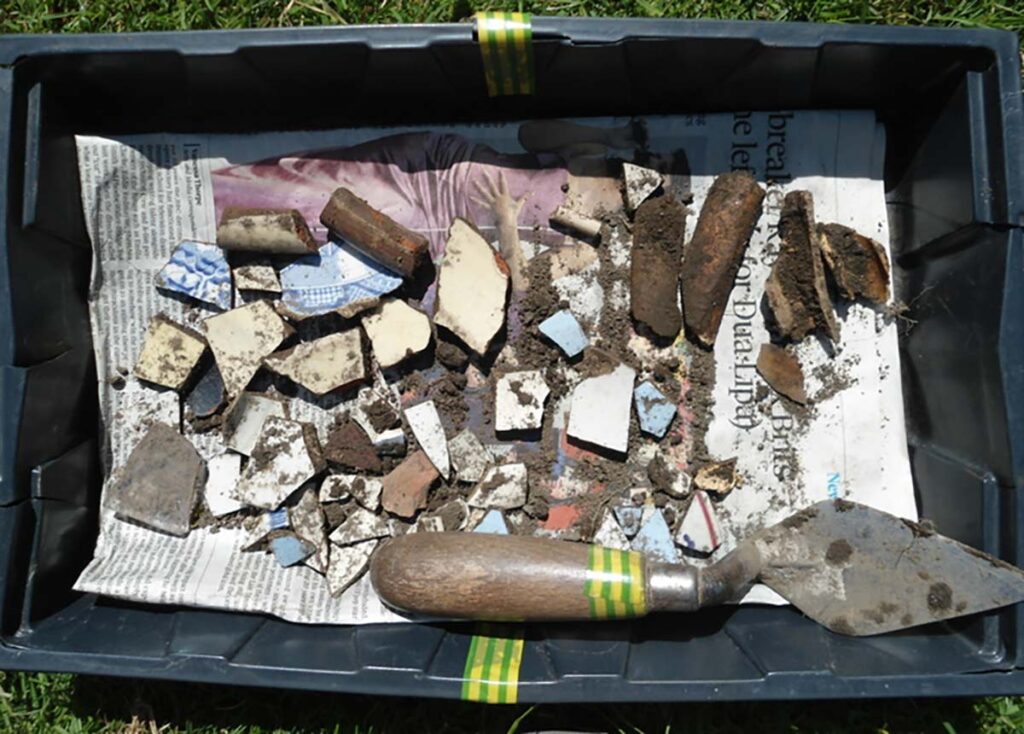
In TP.20, a group of volunteers (headed up by Beverley) were digging through the shallow topsoil with plenty of laughter, they had discovered some diverse wildlife whilst also introducing Darren to seaweed crisps. We took some photos and left them get on it as it was now almost lunchtime.
After lunch, Darren and I visited more trenches where we came across Julie and Simon in test pit 16 a plot which was situated in their own front garden. We decided to stop and have a chat with them; you can hear all about their experience in our up-and-coming podcast, Tales from the Trowel which will be released later in the month.
Test pit 4 had a professional set-up sieving each bucket full of soil as it came out of the ground. By now it was getting late in the day we popped in to chat with TP.2 and TP.1 (ably assisted by an inquisitive sheep) who were based to the west of the village; they too had made good progress.
Meanwhile, back at the village hall, the post-excavation evaluations were taking place. Here we were greeted by a small group of ladies who were busily washing and organising the finds trays as they came in. Each table had a large spread of unearthed ceramics, glass, and stone items. After the finds have been bagged and tagged, they will then go off to Durham University for analysis by a finds specialist. We look forward, in due course, to finding out the dates of the earliest and rarest of items found. Now it was time to head home, the day had ended with a real sense of accomplishment and eager anticipation for day 2.
Day 2: Sunday, June 9th
The day started a little later after a brief chat and a coffee Darren and I headed out to visit test pit 3. This test pit was located at the supposed coffin resting stone. A coffin resting stone is exactly what you think it might be – a place to rest a carried coffin from a village to the nearby church or chapel before horse-drawn carriages or indeed cars. At the stone, Beverley, Stephen and a volunteer were working away to excavate close to the stone to look for a base or some kind of foundation. A large piece of iron was removed from beneath the stone but the pit itself revealed nothing of significance. It was decided that the coffin stone may be a glacial erratic. In other words, a stone that has been moved from its original location by the movement of glacial water or ice over a vast distance.

Test pit 15 assisted by Perry Gardner, was close to the location of a known tithe (red) barn long since demolished. There was evidence of red brick in the test pit which proved the diggers were in the right location. Unfortunately, test pit 15 was overrun with ants as the diggers had inadvertently disturbed their nest. The test pit was yielding plenty of pottery when a call came from Simon to come to number 14 close to the War Memorial. Darren jumped up and dashed across in true Time Team style (full-on Tony Robinson) to see what Julie and Simon had discovered. It turned out to be a George V three-pence coin. For archaeologists, this kind of find is really useful for dating evidence, so it was great to see it come out of the ground.
A curious wall became evident in the front garden of test pit 7 headed up by the residents and Laura, a PhD student from America. This pit is likely to be earmarked for future research.
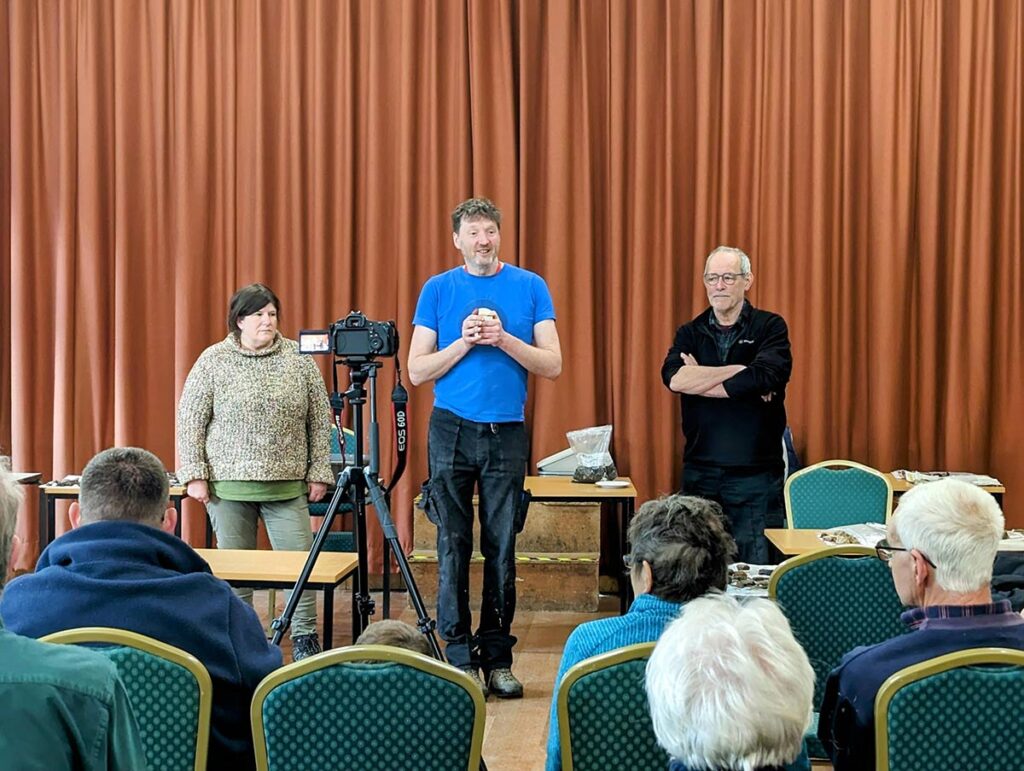
With our photos and interviews pretty much completed we along with others from the dig headed across to the village hall for a debrief with Ady, Laura, Beverly, Stephen and Perry. The tables in the hall were filled with cleaned finds, mainly pottery and glass. Hamsterley Big Dig 2024 concluded with thanks to everyone involved, and refreshments were served. The community’s enthusiasm and participation were heartwarming, and the dig uncovered significant insights into Hamsterley’s history. In true archaeology style, more research is necessary to further our understanding of this beautiful Teesdale village.
A huge thank you to Ady Davis, Dr David Petts, and the residents of Hamsterley Village for your kind support.

South West Durham News covering news across County Durham.