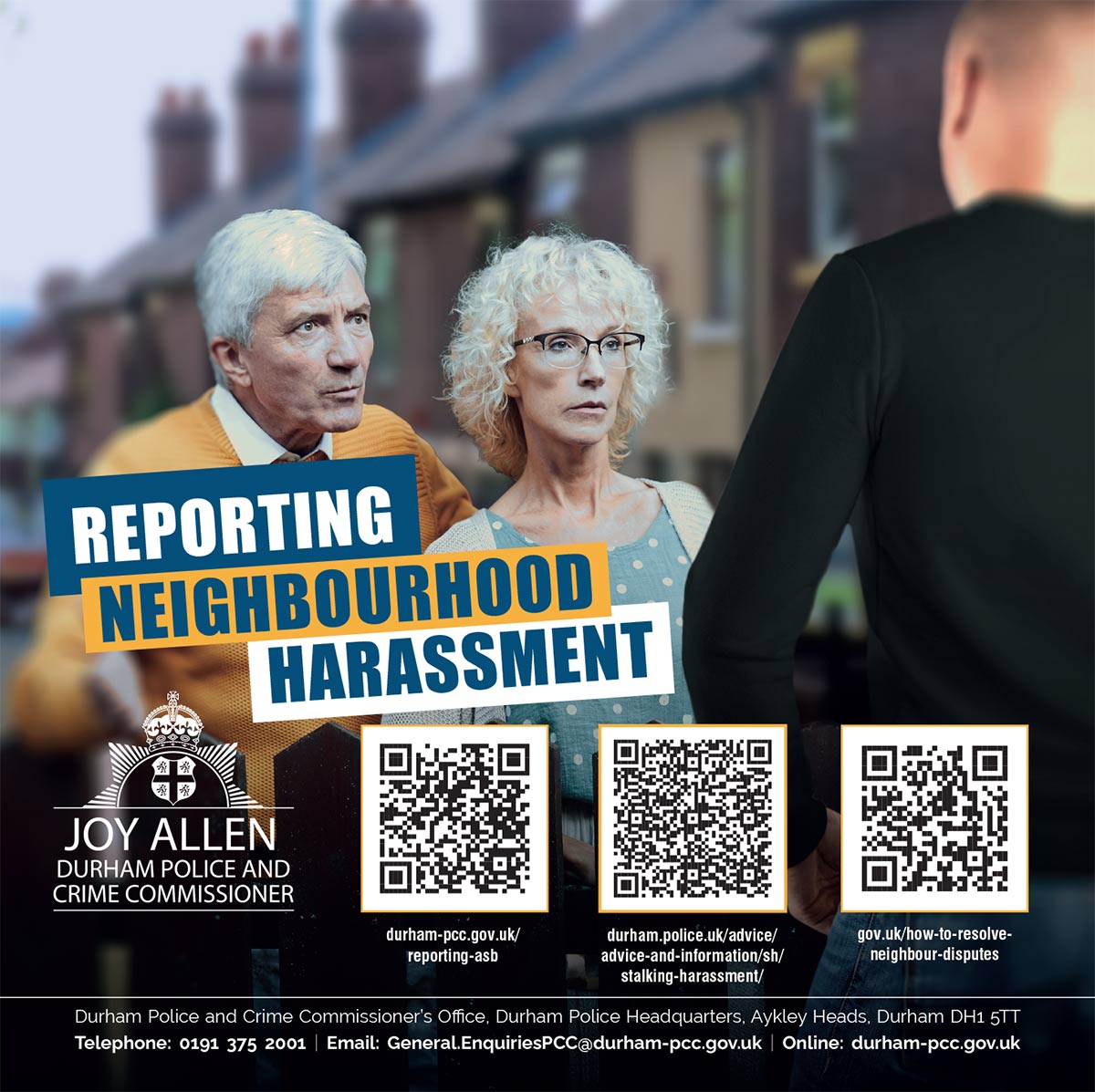
As Police and Crime Commissioner I receive a considerable amount of correspondence concerning neighbourhood harassment from victims who are dissatisfied with how the police and partners are dealing with their problems. Harassment is affecting a lot of people in our communities. In one year, there can be over 4,000 incidents of harassment reported to the police.
Resident’s homes should be places where they feel safe and secure. Sadly, I know only too well after meeting with victims alongside my Victims Champion, that this is not always the case. Victims of harassment can be subjected to regular and sometimes daily harassment and intimidation from their neighbours and this harassment can go unresolved for years.
Neighbourhood harassment can take many forms, from verbal abuse and intimidation to more subtle forms of bullying, such as social exclusion or property damage. Living in such close proximity to one another, it’s no surprise that disputes with neighbours can get heated and unpleasant quite quickly.
Common types of neighbour disputes include:
- Noise, such as loud music and barking dogs.
- Unpleasant remarks, name calling, threats, physical violence, damage to property or possessions.
- Parking.
- Property boundaries.
- Overgrowing trees and hedges.
- Children playing in the street.
Victims have told us how they feel like prisoners in their own homes, dreading encounters with those who are making their lives miserable. The psychological impact of such harassment can be profound, leading to feelings of helplessness, depression, and long term mental health issues.
Victims of harassment have been suffering in silence for too long. Unsure of who or where to turn for help or fearing that speaking out will only exacerbate their situation. As a result, those experiencing harassment often feel isolated, ignored and disbelieved.
Everyone has the right to live in peace in their own home without the fear of being bullied, harassed or intimidated by neighbours. The emotional and psychological toll of living in a hostile environment can lead to a decline in overall well-being. Not forgetting the victims’ children, who can be deeply affected by the stress and anxiety that comes from living in a tense household, which can affect their development and mental health.
To raise awareness and improve signposting, I have rolled out our Anti-Social Behaviour Don’t Suffer in Silence campaign to encourage victims to come forward and seek help from the correct agency, request case review and appeal decisions.
By raising awareness and fostering open communication, we can help those suffering in silence to reclaim their homes and their lives so they can once again live in peace and free from harassment.
How to resolve a neighbour dispute:
- Try to solve the problem informally by talking to them as soon as possible.
- If your neighbour is a tenant, you could contact their landlord.
- You could use a mediation service if raising the issue informally does not work.
- If the dispute involves a statutory nuisance (something like loud music or barking dogs), you can make a complaint to your local council.
- Contact the police if your neighbour is breaking the law by being violent or harassing you.
- As a last resort you can take legal actions through the courts.

South West Durham News covering news across County Durham.