Four years of maximum council tax rises, job losses and greater use of artificial intelligence are among the measures being considered by Durham County Council to plug an £83.7m funding gap.
Cabinet members were told today (Wednesday, September 16) that the authority faces a growing financial challenge up to 2030, driven by rising costs in areas including social care, school transport and waste management.
Officers have identified £21.5m of savings through a programme that includes digitising services, reducing office costs and making greater use of technology and AI.
The report says those savings, combined with council tax increases of 4.99 per cent each year, would broadly eliminate the budget gap across the council’s four-year financial planning period.
About 18 posts could be lost as part of the proposals, made up of nine customer service roles and nine management positions.
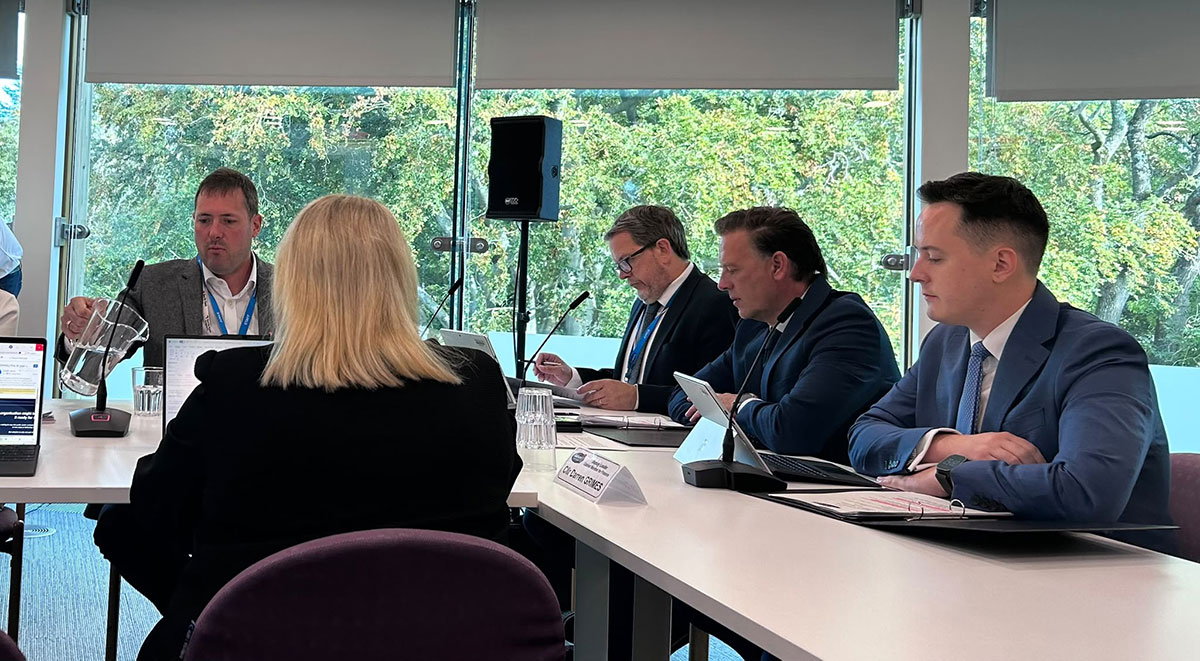
Today’s was the first cabinet meeting to take place in Salvus House following the closure of County Hall in Aykley Heads ahead of its demolition in October.
The report shows the council faces an £83.7 million funding gap before any savings or council tax increases are taken into account, including a £23.3 million shortfall next year.
To address this, the authority has identified £21.5 million of savings, although a further £62.1 million gap would still remain if council tax was frozen.
Among the proposals are management restructures, reducing the number of administrative buildings, digitising services, increasing income and reviewing a range of council operations.
The biggest savings package comes from the council’s resources department, where £3.7 million of savings are proposed.
The report estimates about nine customer service posts could be removed as more residents are encouraged to access services digitally, while approximately nine management posts could also be lost across areas including finance, property, human resources and procurement.
To help deal with the shortfall, officers have drawn up a list of possible savings.
These include changing the way some services are delivered, making greater use of technology and artificial intelligence, cutting back office costs, securing better-value contracts and finding efficiencies across council departments.
Deputy leader and cabinet member for finance Darren Grimes said: “Transformation is no silver bullet and requires a total rewiring of our services, doing things very differently and leaning into a digital solution and artificial intelligence.”
Looking further ahead, the council is also considering major reviews of libraries, leisure services and local networks as part of longer-term transformation plans.
These proposals remain subject to further development and consultation.
The authority is also consulting on future council tax increases.
In the report discussed at cabinet, councillors were told if council tax increased by the maximum 4.99 per cent each year, the council would broadly eliminate the budget gap across the four-year planning period.
Lower rises would mean more savings would need to be found.
Council leader Andrew Husband said Durham remained in a stronger position than many councils across the country.
He said: “Many other councils find themselves in a much more challenging position than here in Durham, and it’s not good luck.
“This is a product of consistent, strong and responsible financial governance here.
“A lot of councils are quite simply battling what is equivalent to bankruptcy.
“We will work hard to come up with innovative solutions to the financial challenges we face when we can.
“We refuse to accept the status quo.”
A public consultation on the proposals is due to run from September 21 until November 15, with final budget decisions expected in February next year.
Georgia Banks
Joshua Nichol

South West Durham News covering news across County Durham.