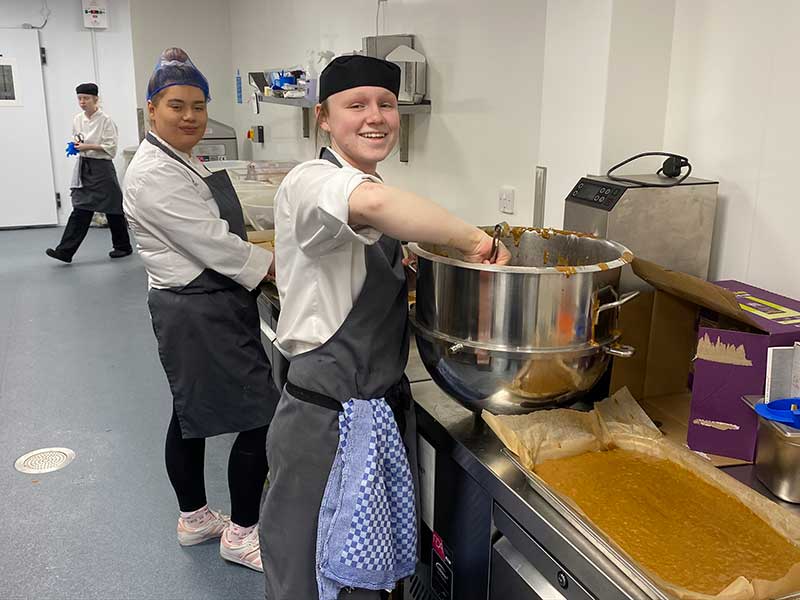
The Auckland Project has joined forces with organisations across the region to feed thousands of vulnerable individuals and families during the ongoing Coronavirus crisis.
Since closing the doors of the visitor destination three weeks ago due to COVID-19, the charity, based in Bishop Auckland, has focussed its efforts on helping the local community through the crisis.
Now, it has teamed up with the South Durham Enterprise Agency and Shildon-based community organisation, Health Express, to provide food to those who need it via a local distribution network.
The initiative, aptly entitled The Auckland Project: Closed Doors, Open Hearts, has already produced more than 10,000 meals for people in the Bishop Auckland and Shildon area, with plans to increase production as needed over the coming weeks.
Funding has already been received from County Durham Community Foundation, with further support sought from local elected members and the Bishop Auckland and Shildon Area Action Partnership.
Donations-in-kind have also been received from a number of regional suppliers, including cardboard manufacturer, Durham Box and freezer manufacturer, Ebac.
Closed Doors Open Hearts
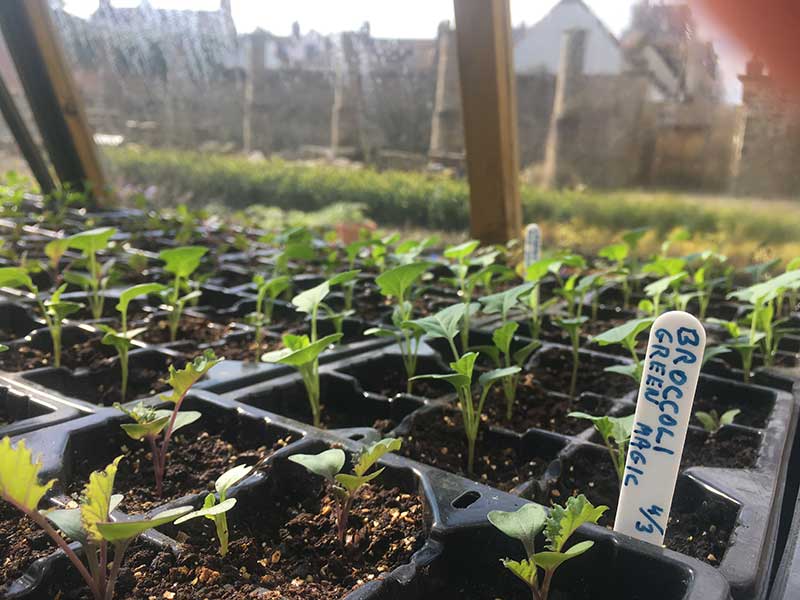
Building on its key principles of supporting local produce and sustainability, The Auckland Project’s approach to tackling the Coronavirus is three fold: creating nutritious, home cooked meals; working with South Durham Enterprise Agency and Health Express to distribute those meals to the most vulnerable people and growing produce to support these efforts in the coming weeks and months.
Liz Fisher, Director of Curatorial and Engagement at The Auckland Project, said: “We are building on our experiences of delivering a Holiday Hunger project with partners in 2019.
“Through that we found there was a real need for young people and families to receive a hot meal when schools were closed.
“In the current circumstances, the needs of the local community are much broader and so we wanted to make the most of our facilities and talented chefs to help cater for those who need it most.
“We are also looking beyond the immediate need to ensure we are growing produce across the site that can help provide sustainable ingredients for the initiative in the longer term.”
Food production
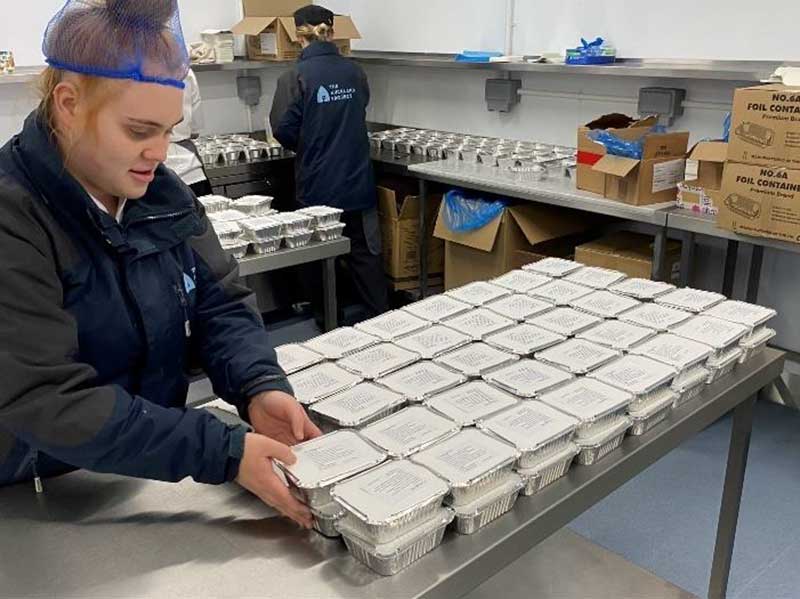
A team of 17 staff and volunteers are working in The Auckland Project’s Central Kitchen, preparing home cooked and familiar dishes for distribution to those who need them.
The team, including seven former or current apprentices at The Project, have been in voluntary, self-imposed lockdown since 17th March, only travelling between home and work to ensure the kitchen remains protected.
They are currently producing around 500 meals per day, five days a week, with an aim to increase this to 1,000 meals per day as soon as possible.
Dishes, such as cottage pie, mince and dumplings, lasagne, carrot cake and a variety of sponges, including lemon, chocolate and syrup, are being frozen, ready for distribution, with more than 10,000 dishes made to date (5,000 main meals and 5,000 desserts).
The team is also preparing fresh food trays, made up of dry goods (flour and pasta), bread, dairy products (milk and butter), fruit and vegetables, tinned fish and tinned meat, to help people cook at home.
Where possible, ingredients have been harvested from The Auckland Project’s gardens, with most supplies coming from catering companies, DeliFresh and BidFood.
The companies are still being paid market prices as part of a commitment by the charity to support its suppliers through this difficult time and are also donating any surplus ingredients to assist with the efforts.
Ant Brown, Culinary Director at The Auckland Project, said: “The meals we are producing are all designed to be nutritious and full of calories, to help sustain those receiving them. They feature familiar comfort foods that a wide range of people will eat and enjoy and can be easily heated at home at a time to suit.
“With more staff and equipment, we potentially have the capacity to increase production to around 2,000 meals a day, but in a lot of ways we hope that demand isn’t there and that people are managing through the crisis okay already.
“We have been inundated with offers of support from volunteers so far but are currently limiting the numbers involved due to Government advice regarding isolating and social distancing and will cautiously expand our team as demand requires.”
Food distribution
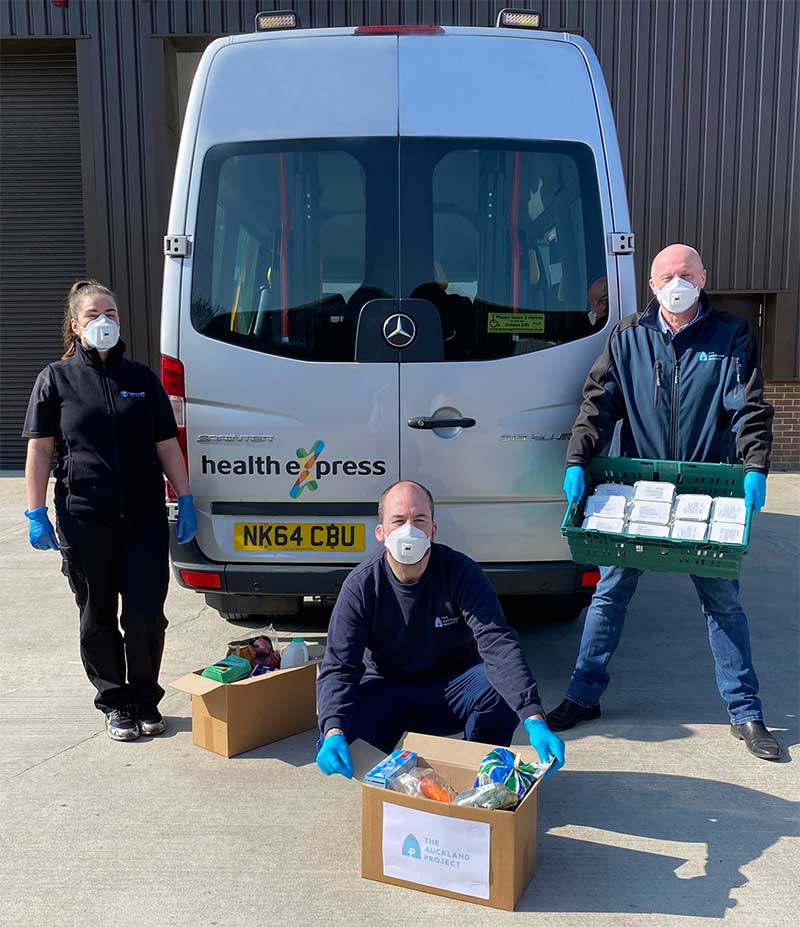
The Auckland Project is working with not-for-profit economic development agency, South Durham Enterprise Agency, and Shildon-based community organisation, Health Express, to distribute the food produced via a series of designated community hubs.
Referrals are being received from Durham County Council, who are co-ordinating requests for help from individuals and regional organisations, with distribution being carried out via these third parties only, and not directly from The Auckland Project, to ensure it reaches those who need it most.
Local cardboard manufacturer, Durham Box, has donated 1,000 boxes to help package the meals for distribution and freezer manufacturer, Ebac has donated several freezers to ensure the meals can be stored safely until they are required.
Councillor Rob Yorke, Trustee for Health Express and Chair of South Durham Enterprise Agency (SDEA), said: “We are delighted that both Health Express and SDEA can work alongside The Auckland Project to help coordinate and distribute food parcels to the those that need them within the Bishop Auckland and Shildon AAP area.
“All County Councillors without exception have fast tracked funding from the respective Neighbourhood Budgets to this worthwhile project and we are ready to play our part in these unprecedented times.”
A Harvest for the Future
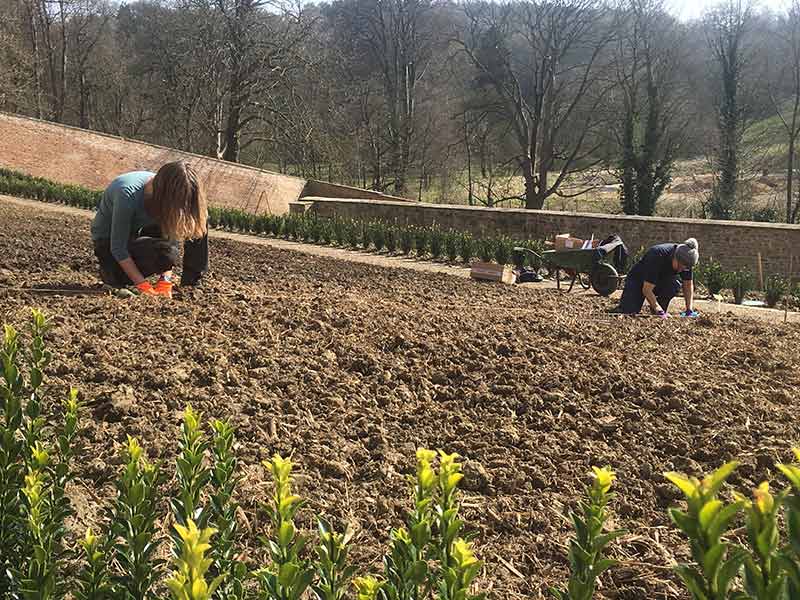
As well as creating food for immediate distribution via its third parties, The Auckland Project is building on the history of growing in the grounds of Auckland Castle, to plant crops that can be harvested as part of the Closed Doors, Open Hearts initiative in the next 50 to 100 days.
So far, around two acres of the 17th century Walled Garden have been allocated for this specific purpose.
Produce already planted around the estate includes leeks, broccoli, kale, turnips and chard, along with a range of eating and cooking apples.
Within the planting of the Walled Garden there will also be a wide range of potatoes not usually found on supermarket shelves, like Purple Majesty, as well as a broad range of peas and beans including the Badger Pea, more commonly known as the Carlin Pea, which was thought to be first cultivated by monks in the Middle Ages.
These will be used as part of the food production within Closed Doors, Open Hearts and distributed via the charity’s third-party network as required.
Andy Nesbitt, Curator of Parks and Gardens at The Auckland Project, said: “The land surrounding Auckland Castle was traditionally used for growing all manner of fruit, vegetables and flowers, with the Walled Garden at its productive heart.
“Now, we are harnessing that history to provide a wide range of fresh ingredients, for food production as part of the Closed Doors, Open Hearts initiative.
“We expect to harvest in the summer and if the Coronavirus crisis has been resolved by then we will distribute the produce in comfort boxes to those who need it via our third-party distribution network.”
For more information or to make a donation to The Auckland Project: Closed Doors, Open Hearts initiative, visit www.aucklandproject.org.
Durham County Council has established a helpline, webpage and support network to help vulnerable people in County Durham who are struggling during the Coronavirus pandemic. For more information visit https://www.durham.gov.uk/covid19help. You can also call 03000 260260 between 9am and 5pm weekdays and 10am to 3pm on weekends.

Bishop Auckland's local community newspaper.