
People with a passion for railway history can help preserve some of Britain’s most significant railway treasures through a new Adopt an Object scheme launched by the National Railway Museum.
For the first time in the museum’s history, supporters can adopt objects from the National Collection, helping to care for and be part of the stories of six remarkable objects that represent key moments in railway innovation and history.
Anthony Coulls, Senior Curator of Rail Transport and Technology at the National Railway Museum, said: “Whether it’s a locomotive you remember seeing in service, a piece of railway engineering that fascinates you, or an object whose story has captured your imagination, Adopt an Object offers a new way to connect with the National Collection while supporting its long-term care.”
From just £3 per month, adopters can choose one of six memorable objects including several iconic locomotives, a pioneering diesel railcar, the oldest surviving royal carriage and a model railway carriage used as evidence in one of Britain’s most sensational Edwardian murder trials.
The world-famous Shinkansen Bullet Train housed at the NRM is one of only two examples outside Japan and the first rail vehicle built and operated outside Britain to enter the National Collection. Launched in 1964, the Shinkansen transformed expectations of train travel through its speed, comfort and reliability. As the world’s first highspeed rail system, capable of travelling at up to 130mph, the ‘Bullet Train’ could cover the 320-mile line between Tokyo and Osaka in just over three hours. It remains one of the most influential railway vehicles ever built.
In the museum’s Great Hall, you will find Furness Railway’s steam locomotive nicknamed ‘Coppernob’ – an exceptionally rare Bury locomotive that survived the Barrow Blitz in 1941 and still bears the scars. Built in 1846 for the Furness Railway, Coppernob takes its nickname from the distinctive copper-clad firebox that made it instantly recognisable. This example was withdrawn from service in 1900, following a long working life of over 50 years, and then displayed in several locations around the country.
In 1941, when on display in a glass shelter at Barrow Station, it was damaged during a German air raid. Damage caused by the shrapnel can still be seen on its copper firebox casing today, giving this already iconic locomotive battle scars that tell a visual story of its unique history.
Evening Star was the very last steam locomotive built by British Railways and, as such, stands as a physical symbol of the end of Britain’s iconic steam era. Completed in 1960, Evening Star was painted in the green livery usually reserved for express passenger engines, instead of the usual black applied to the other 9F freight locomotives. Most freight engines didn’t receive names either, but given its special status, Evening Star was chosen following a competition in a British Railways staff magazine. It was a nod towards one of the first locomotives to run on the Great Western Railway, Morning Star.
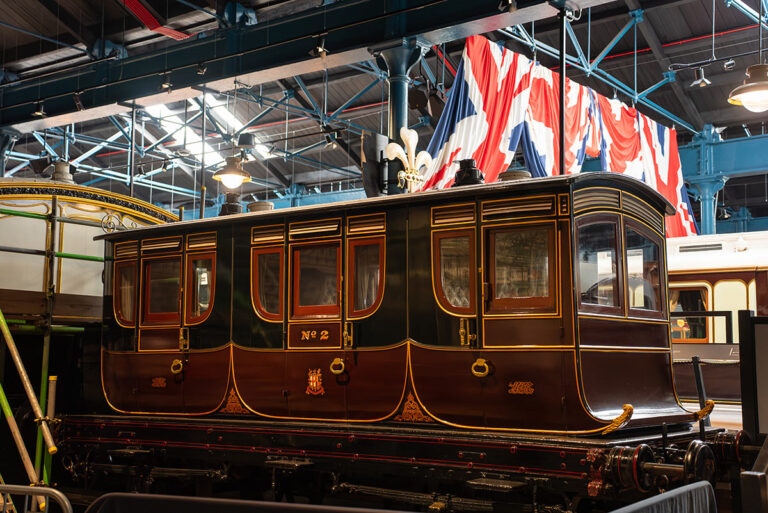
A further three objects are also available for adoption: the stylish and streamlined Diesel Railcar No.4 that offered a glimpse of rail travel’s future nearly a century ago; Queen Adelaide’s Saloon, the oldest surviving royal railway carriage; and a model of a Third Class Smoking Compartment used as evidence in a 1901 murder trial.
Every adoption includes a digital adoption certificate, a personalised thank you from the museum and exclusive email updates about the chosen object throughout the year, helping supporters learn more about the history, technology and significance of the item they have selected.
As a charity, the National Railway Museum relies on public support to care for its internationally renowned collection. Income generated through the scheme will help fund conservation work, learning programmes, new exhibitions and the long-term preservation of railway heritage.
Adoptions last for 12 months and can be purchased for supporters themselves or gifted to fellow enthusiasts. Objects can be adopted for £3, £5 or £10 per month.
For more information about the National Railway Museum’s Adopt an Object scheme, visit the National Railway Museum website: www.railwaymuseum.org.uk/adopt-an-object.