
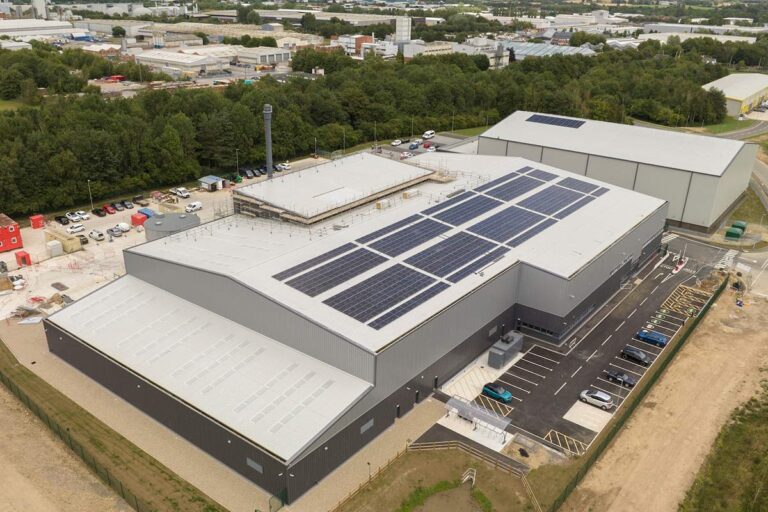
The company in charge of a controversial County Durham incinerator has pledged to work with concerned residents amid fears over its impact on people’s health, writes Local Democracy Reporter Bill Edgar.
Fornax is set to burn around 10,500 tonnes of waste per year from the facility in Merchant Way, Newton Aycliffe, pending final approval.
The plant – which the developer says will generate enough energy to power the equivalent of 700 homes – is due to begin operating in the first quarter of 2026 and would be the first of its kind in the North East. But locals fear their lives and health will be impacted by the constant burning of hazardous waste.
In the company’s first major interview since protesters mounted a significant opposition campaign earlier this year, bosses admitted they understand the concerns and vowed to be transparent about the site’s purpose.
“I understand why locals have been so upset,” said Ian Jones, Fornax Chief Executive Officer.
Speaking while touring the working-in-progress site, Mr Jones added: “They have had no information to go on, and they believe there has been no transparency; there have been no details.
“We are committed to being a good neighbour and will work with the community to open dialogue and build a trusting, two-way relationship.”
Despite Fornax stating there would be no environmental health impacts, the type of waste set to be processed has worried locals.
Sarah Travis, speaking as part of the Stop the Heighington Lane Incineration Plant Campaign group, said: “We don’t want this new facility on our doorstep affecting our health or that of our children’s health, or that of the local wildlife and environment.”
The facility is located just a short distance from schools, care homes, and playgrounds, with campaigners warning: “If this goes ahead, a 12-mile radius could be facing decades of exposure to harmful pollutants, many invisible and long-lasting.”
Yet, Fornax said the plant will be strictly controlled and regulated, and has now provided an insight into how the £440 million facility will operate and what will be burned.
During operation, all waste brought to the facility will be assessed before being destroyed in the plant.
Around 70 per cent of the waste treated in the plant will be clinical waste from hospitals, labs, and care homes from across the North East.
The remaining 30 per cent will be classed as hazardous waste.
Clinical waste treated in the facility will include used needles and blades, scrubs, and surgical materials from clinical theatres.
Hazardous waste will comprise medicines, such as cancer drugs and pharmaceutical waste, along with plastics from discarded electricals, such as toasters and kettles, as well as paints and DIY chemicals, pesticides, and herbicides.
All hazardous waste brought to the site will be contained within sealed airtight containers, carried by specialist licensed waste vehicles. Waste will only be stored within the confines of the treatment building.
Mr Jones said the Newton Aycliffe facility is “desperately required” and is the safest way to dispose of clinical and hazardous waste.
“Fornax will be using state-of-the-art technology, aiming to set a new gold standard in how the UK manages this waste safely and sustainably,” he added. “We are committed to delivering cleaner, greener, and safer solutions for high temperature thermal treatment.
“We look forward to working with the community in the months ahead as we share more information about the facility and await the outcome of our permit application.”
The Environment Agency will deliver a verdict on the permit later this year.