


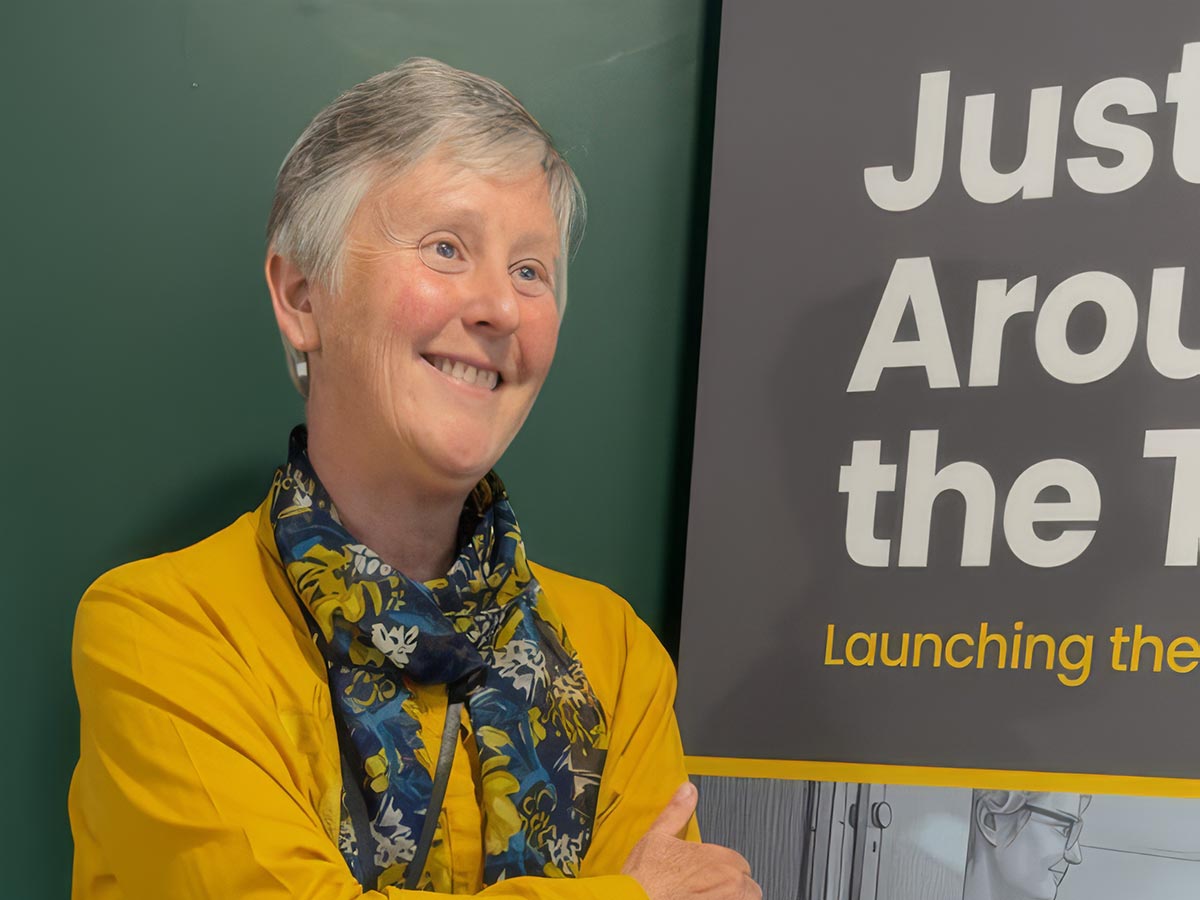
A woman in a Durham prison was so ill she thought she was a pigeon, writes volunteer community journalist, Henri Birkholz.
Prison officers stood beneath her wardrobe, ready to catch her if she fell. The NHS claimed it had no bed for her. The prison had no choice but to hold her. Only when her prison sentence ended did proper treatment begin.
Months later came an unexpected visit: the same woman, now well, returning to apologise to the staff she had hurt during her illness.
The governor who oversaw it all says stories like that were not rare. That is what troubles her most.
That governor was Gabrielle Lee — thirty years in criminal justice, from probation work in West Yorkshire to managing mother and baby units and finally to running the North East’s main women’s prison, HMP Low Newton on the outskirts of Durham City, before resigning as governor.
The resignation came because the job required her holding profoundly mentally unwell women in conditions she considered inadequate.
Conference
During a major criminal justice conference at the St Cuthbert’s Society in Durham last month, she described what that period taught her about the system.
“Prison services are being used to provide mental health inpatient care for some of the most extremely unwell people — when those people should be in hospitals,” she said. “That is the profound moral dilemma of withholding treatment from somebody for lack of health resources.”
It was that experience, and the determination to change it, that persuaded Lee to participate in an initiative by County Durham and Darlington Police and Crime Commissioner Joy Allen: an innovative year-long effort to bring criminal justice professionals, academics, health workers and people with lived experience around the same table to turn difficult conversations into practical change.
The roundtable model was designed to create open and honest dialogue while also delivering measurable practical outcomes for residents, victims and offenders across County Durham and Darlington.


Recall failure
Dr Shona Minson, Oxford University criminologist and member of the national Women’s Justice Board, told the conference that what happened at Low Newton was not an isolated failure — it was the system working exactly as it had been allowed to drift.
Criminal justice, she said, has become the last door that cannot legally be closed. When every other service runs out of capacity, prison absorbs what remains. The recall system ensured women kept cycling back through it.
In the year to September 2024, more than 2,600 women had been pulled back into that already overstretched system — 83% of them for non-criminal breaches. Women recalled for missing a probation appointment. Women recalled for failing to declare a change of address. Women recalled for losing contact with an officer they had never met in person. Nearly five million pounds a year to achieve nothing except disruption.
But on 26th April, in line with the recommendations of an Evidence Paper authored by Lee and launched at the conference, recalls for sentences under 12 months were abolished, and courts were told short sentences should only be used in exceptional circumstances.
Law change warning
Lee was modest about taking credit for the change in the law, and careful not to declare victory.
With magistrates no longer able to impose short sentences, the worry is that remand — the practice of holding someone in custody before trial — becomes the new backdoor. Women held this way for their own protection, often for months, do not show up in sentencing statistics and face none of the same scrutiny.
Dr Minson went further: courts replacing short sentences with suspended sentences risk creating a new crisis entirely. Suspended sentences carry high breach rates, and when they are breached, women serve the full term — losing everything they had managed to rebuild.
For Lee, the story has never left her — not because it was exceptional, but because it wasn’t.
Hundreds of women passed through Low Newton in similar states of crisis, held in a prison because every other door was closed. The woman who thought she was a pigeon got better. She got treatment, recovered, and came back to say sorry.
The roundtable initiative has already contributed to the development of women-specific housing models, national lobbying around long-acting buprenorphine treatment, consultation work exploring reductions in short-term custodial sentencing, the development of trauma-informed and peer-led recovery approaches and projects linking housing, treatment and rehabilitation pathways.
Lee’s point is simple: “That person’s natural state of being isn’t that level of distress. But for proper care from the health service, that person could have been sitting here engaging in these conversations with us.”


Henri Birkholz

South West Durham News covering news across County Durham.

