


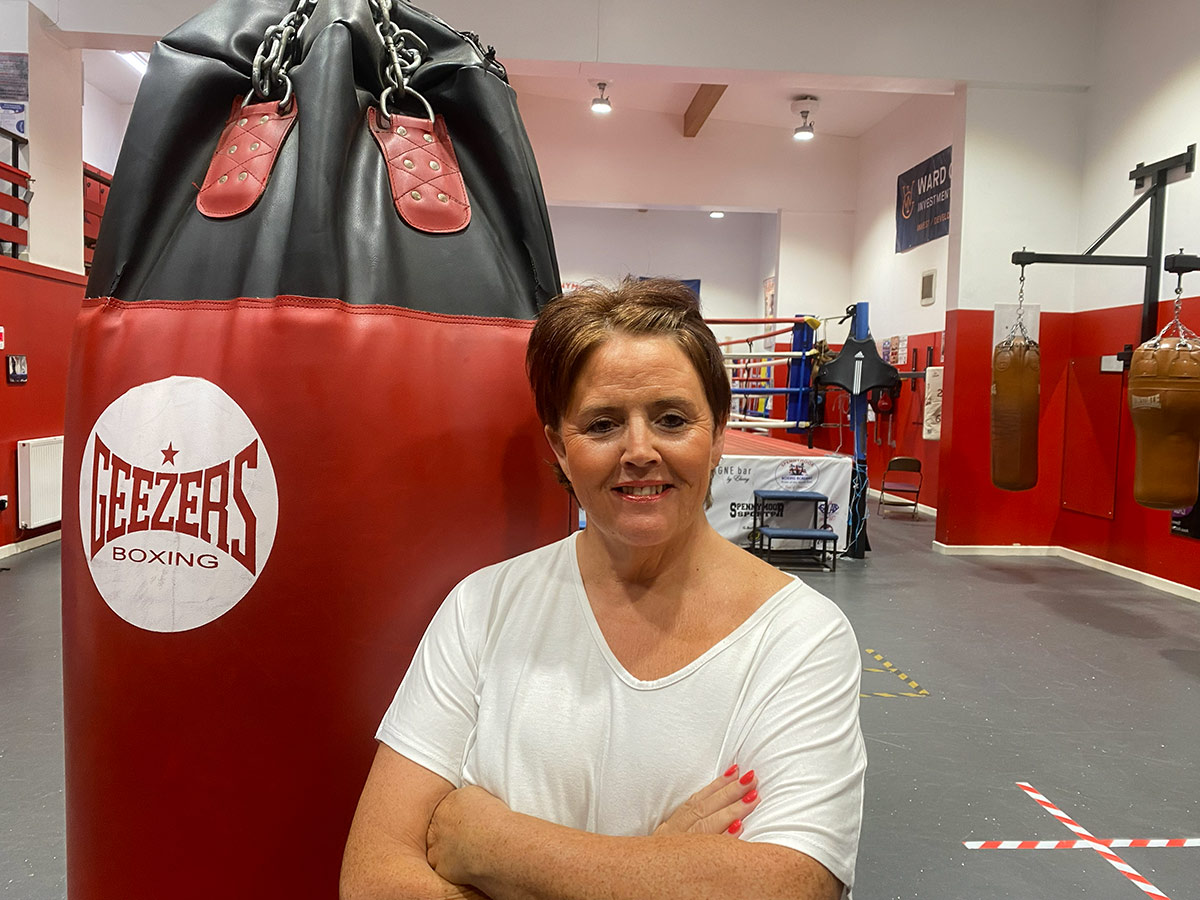
“It was December 21st 2019 – a date I’ll never forget. I’d just finished a 12hr shift and felt extremely cold – so I got home and ran a bath. I just remember waking up and two hours had passed – went to bed and was woken by the police the next afternoon.
“A nurse, a colleague of mine, was in attendance as concerns were raised – they were doing a welfare check. I had to be rushed to the hospital.”
Pneumonia, sepsis and a collapsed lung was the diagnosis of Pam Elliott on that day, writes volunteer community journalist, Anton Weineck.
After two weeks in hospital her memory still wasn’t what it was before: “I was bumping into things, I was constantly tired after doing simple tasks, I forgot familiar routes when driving and my body was in constant pain. As time went on, I was concerned about my memory not improving.”
Pam had to go through numerous tests – memory tests, MRI’s and CT scans: “Psychological assessments showed my memory was declining; however, scans were normal.”
She was referred to the RVI in Newcastle: “An assessment was done and a Lumber Puncture was arranged, this tested the spinal fluid.” Her final diagnosis: Dementia, at an age of 56 – so called young-onset dementia.
Pam, from Shildon, is one of 70,000 in the UK – just 0.1% of the population – who has been diagnosed with dementia before the age of 65.
Since her diagnosis, more than three years have passed. Pam has come a long way with boxing as her new old companion.
To live with a life-changing diagnosis
“My life prior to the diagnosis, was very full with work, socialising, boxing, being with my grandsons and family – I loved it!”
After the diagnosis, Pam was, as she says: “Upset initially – I was crying for a bit. But what could I do about it? There are worse things that could have happened.”
Before her diagnosis, Pam worked in a prison as a substance misuse support worker – a dedicated unit for anyone that came in with drug or alcohol issues.
“After having ongoing assessments with an occupational therapist, I couldn’t return to work,” due to the environment and nature of her work she says.
Pam has been through a lot of things in her life thinking “it’s been character building.” After her diagnosis and everything that came with it, Pam always tried to have a positive mindset: “Living the best life I can – that has helped immensely.”


Face-to-face community
It was a long journey to come back to that stronger state of mind.
“You’re given medication, somebody comes out to check your blood pressure – and that’s it.
“Then somebody comes and you get a bundle of papers and you talk about your will and power of attorney. There’s nobody really to talk to yourself.”
Pam missed personal interaction: “They have Admiral Nurses – specialist dementia nurses who provide expert, tailored support to families and individuals affected by dementia – but it’s on the phone – it’s not face to face. That was quite isolating.”
She looked for organisations that could help her with her diagnosis, but “there isn’t anything especially for those who have young-onset dementia.”
She often got told that she would be “too young”. Dementia groups are often organised for the more common types.
She “couldn’t believe that there was no support for such a life altering diagnosis”. Therefore she looked for her own community, and found it next door.
An old love
“I used to do boxing years ago,” explains Pam. But over time, work and shifts somehow got in the way.
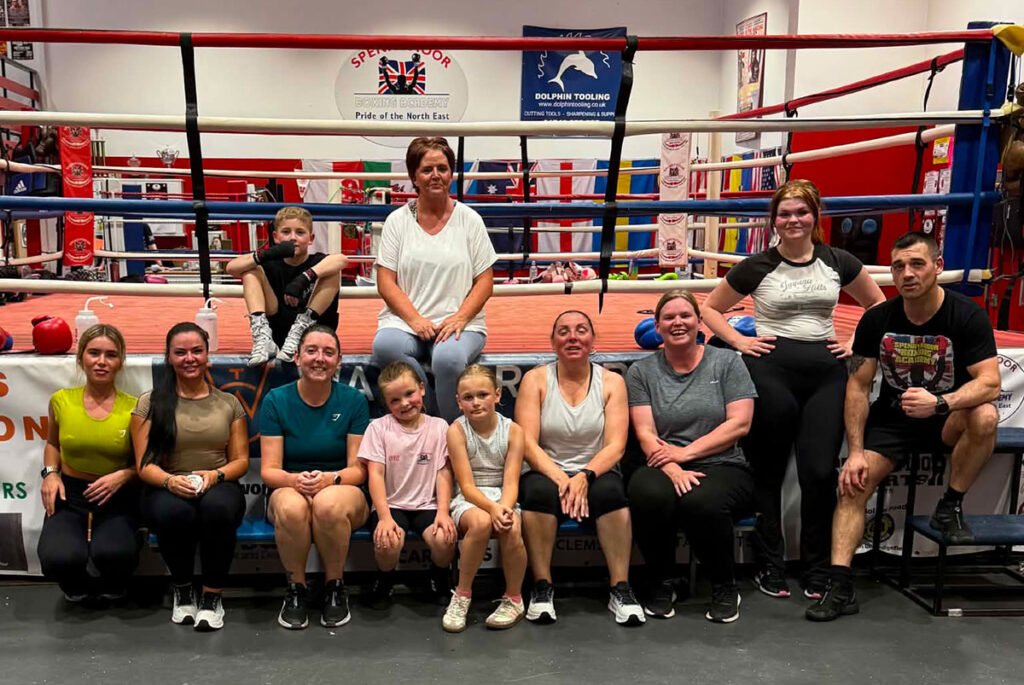
Then, “I think it was last summer – I wanted to get back into boxing and see if it would help,” so Pam joined the ‘Women’s box fit’ class at Spennymoor Boxing Academy.
“All made me feel so welcome. I even felt comfortable telling people about my diagnosis and it was no big deal. They treated me as normal.”
Pam found herself a community: “They’ve been absolutely marvellous and it’s a good group to get involved with and to make friends,” she said.
One of her coaches, Billy McAloon is full of praise: “Pam brings so much positivity when she comes and even when she leaves – as much as she might be sweating.”
They both enjoy that togetherness and the “good banter,” as they say.
Pam has a special bond to her coaches, Billy and Stephanie Ellis and has never looked back: “They are enthusiastic and fantastic. Everyone loves their classes.


Boxing for memory
“And this has definitely helped, especially with my coordination and obviously – having to think.”
With boxing, Pam was able to improve her memory again. So she approached Billy to ask for more sessions: “I put on a second one,” he said, “but that wasn’t enough and now she does one-on-one sessions with me as well.”
Boxing has had an immensely positive effect on Pam’s life: “People have an idea of what young-onset dementia is going to look like – but I’m still driving, I come boxing three times a week – I’m able to do all those things.”
Even though her life changed 180 degrees, Pam has gained a new level of confidence: “To be honest, I don’t think about it. Dementia doesn’t define me.”

My strength is your strength
Pam wants others to feel seen and heard – that’s why she reached out for this article and that’s why she thinks about starting her own Community Interest Company (CIC): “The idea, research and networking has taken many years and is still in the process.”
But it won’t be about young-onset dementia: “I’ve been through domestic abuse and it goes back generations,” she revealed. “So I want to set up a wrap-around service where it would be therapeutic work programmes for families.”
For her it’s about starting at an early age. Teaching young families what a healthy relationship is – what does that look like, what does it feel like?
“I want to look at the prevention side of things rather than coming in afterwards when there’s a crisis or intervention needed.”
Pam found herself a community at Spennymoor Boxing Academy. Now she’s ready to create one for others. Even in difficult situations, she wants people to gain strength and confidence.
With all of the things life has thrown at her, Pam is still leading by example: “I think it’s how you look at life, like my consultant said: ‘If you have a positive outlook, your chances are higher that you will have a good life.’ I could sit at home and be a victim and not do anything but life’s too short.”
Even with her diagnosis and her personal background, Pam still tries to focus on one side – the positive: “A lot of good’s came out of it. Obviously boxing, meeting new people and spending time with my grandchildren – I found peace.”
One last thing
“If anybody wants to get in touch or if you want to start a support group – absolutely. I think it’s so badly needed. We need to get rid of that stigma.”
So, if you want to reach out to Pam to talk about your story or to connect and work together, contact her via email at: pam.elliott2[@]outlook[.]com


Anton Weineck

Shildon & District's local community newspaper.

Spennymoor's local community newspaper.


